
Welcome to this phenomenon known as LIFE. It encompasses beauty, wonder, tragedy, and pain. As sentient beings, we possess a biological imperative for connection with others, a concept grounded in the Polyvagal Theory developed by Dr. Stephen Porges. This imperative has evolved through pivotal moments in our history when early humans, particularly mammals, required social bonds to foster compromise and cooperation, essential for our survival as a species.

Humans inherently require connection to foster the emergence of new individuals, while concurrently developing what we term as safe enough states that facilitate trust in others and in ourselves. This intricate interplay of co-regulation and autonomy underscores the neurobiological foundations of our emotional and social experiences. Our early interactions, where caregivers attune to our needs, fundamentally shape our attachment styles, which subsequently inform our relational patterns throughout life.
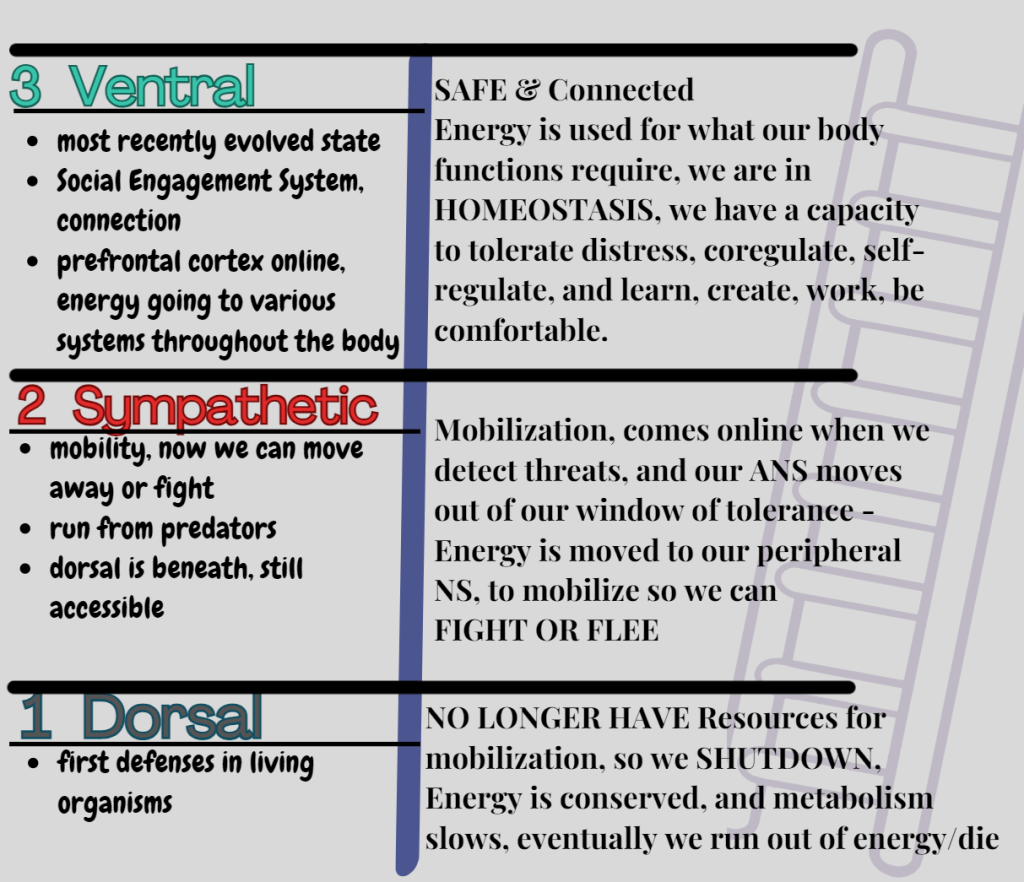
THE HIERARCHY OF the Autonomic Nervous System
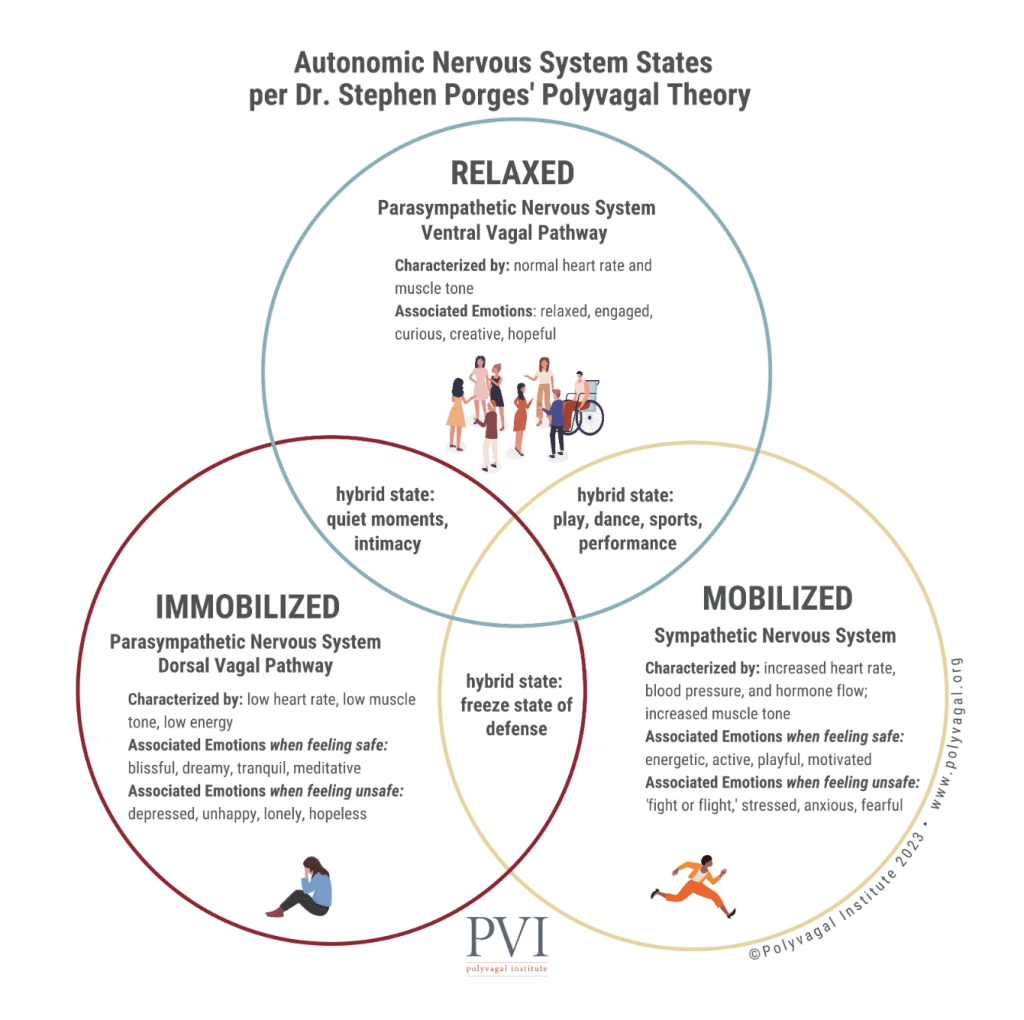
The Social Engagement System posits that our Autonomic Nervous System (ANS) functions as a cohesive unit, comprising numerous interconnected nerves that traverse our body, originating from the brainstem as cranial nerves. These nerves extend throughout various organs, including the vocal cords, heart, lungs, digestive system, and other tissues, glands, and fascia. Notably, the vagus nerve, classified as the tenth cranial nerve, plays a crucial role in this system. Our social engagement system is adept at detecting subtle cues—whether perceived as safe or threatening—via neuroception, a process that operates below conscious awareness. This mechanism activates our defensive responses when threats to our survival are sensed. Interestingly, the dynamics of social engagement often hinge on discreet facial movements of others, which may be defensive in nature, regardless of the individual’s awareness. In response, we exhibit our own defense mechanisms, often influenced by our adaptive survival patterns. The presence of vagal tissue in our ears heightens our sensitivity, particularly when we detect a caregiver’s tone that suggests danger. The intricate network of cranial nerves and vagal nerve fibers facilitates our ability to engage socially, allowing us to subconsciously perceive subtle cues that indicate the authenticity of expressions, such as recognizing a genuine smile when the eyes reflect that same joy.

Society has undoubtedly evolved at a pace that exceeds our biological and psychological development as humans. During periods of heightened stress, such as approaching deadlines, engaging in new activities, managing substantial academic workloads, or navigating challenging workplace cultures and family dynamics, individuals often experience a sense of overwhelm. This can trigger a significant increase in physiological activation, resulting in the use of adaptive strategies previously employed in response to perceived threats to survival. For many, these experiences evoke feelings akin to a survival threat. In confronting such overwhelming circumstances, individuals tend to develop patterns of avoidance or, at times, dissociation. Notably, early life experiences—such as receiving attention or support during distress—can reinforce these behavioral patterns, shaping how needs are met throughout one’s life.
These patterns are adaptive. If, for example, our needs are not met, we are left with our basic responses: crying and screaming, accompanied by a racing heart and quick, shallow breaths. Prolonged energy expenditure in such states could lead to severe consequences. Here, we observe the evolutionary sequence in reverse. We may initially feel tuned in by our caregivers, but then that support can vanish. As newborns, we are not safe to be alone and uncared for. Once activated, there is a limit to how long our body can sustain sympathetic activation; this triggers a shift to the ‘dorsal’ state of the autonomic nervous system (ANS) located below the diaphragm. In this state, we enter shutdown mode. The vagal break is engaged, slowing bodily functions to prevent death. During shutdown, we might appear lifeless, much like an opossum feigning death. Staying in this state for too long can deplete our energy reserves, ultimately leading to death.
If we got through tough times by dissociating, which means moving away from what’s happening in the present moment, that pattern might keep happening when we face similar events or “triggers.” This can occur because we may not have the safety or coregulation we need, which means that we don’t have the right kind of support that really understands us. As a result, our way of coping doesn’t change.
When we connect with one another, we are engaging through a lens of nervous system states, which are deeply ingrained in patterns that start very early in life. In my case, it began due to complications during my mother’s pregnancy, resulting in my birth via emergency C-Section over two months early. After my birth, my mother needed to remain at the hospital where I was born while I was taken to a different facility for NICU care. During this time, I experienced very little physical contact as I stayed in an incubator; my dad, grandma, and aunts had to wear gloves to touch me while I was in the incubator.
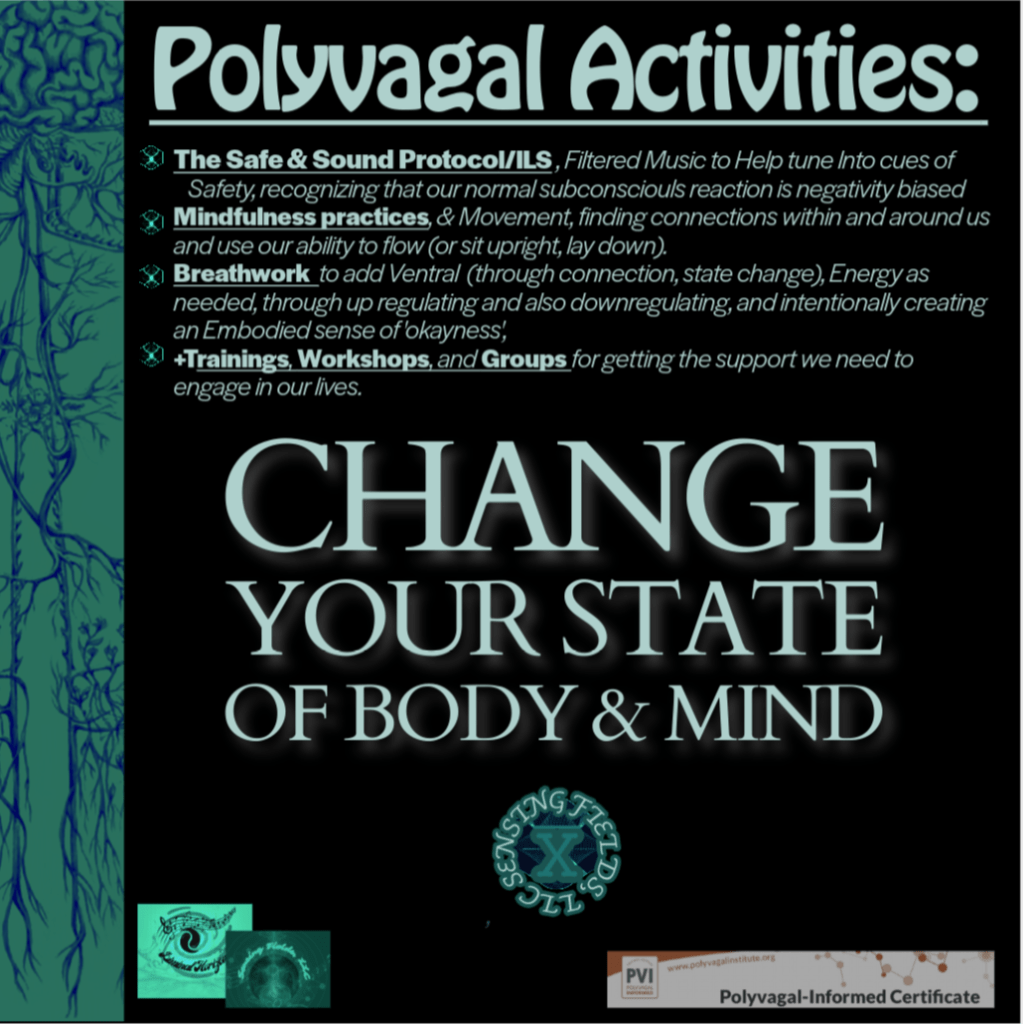
It is entirely possible to cultivate the ability to be present in our relationships by exploring the patterns that may feel stuck in our lives. By developing awareness of our bodies and listening to the sensations they convey, we can trust in our capacity to face challenges. Implementing practices can help reduce the intensity of our sympathetic reactions, allowing us to think before we respond. It’s important to recognize that each person is a unique individual, and we won’t always agree on everything. By paying attention to our behaviors, we can observe our tendencies and learn to pause rather than react impulsively. This shift enables us to respond thoughtfully, enhances our psychological flexibility, and equips us with tools for self-regulation, thanks to the concept of neuroplasticity. Through intention, psychoeducation, and mindfulness practices, we can rewire our neural pathways and learn new ways to interact with parts of ourselves, even those that may hold onto past chaos we might not fully understand.
